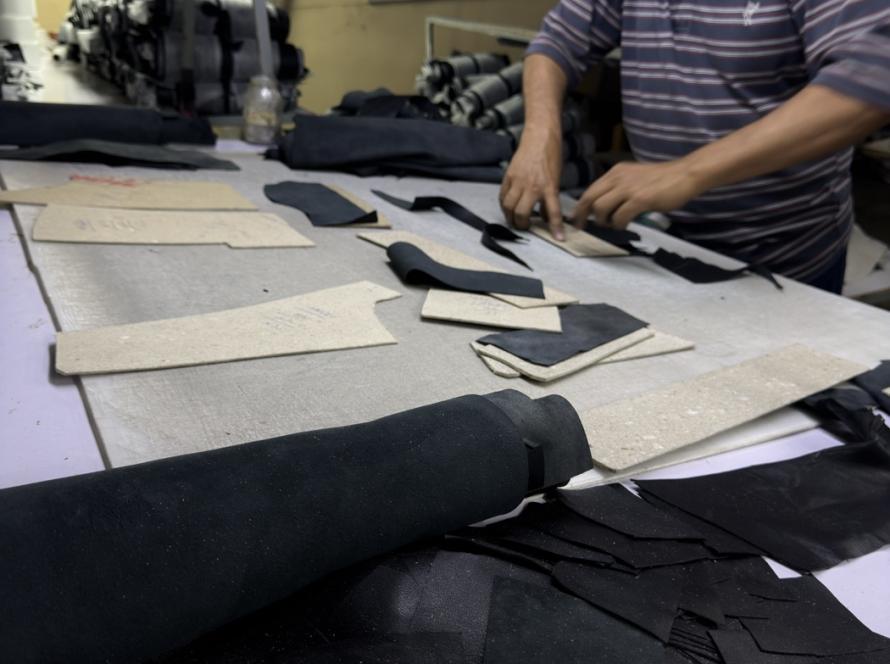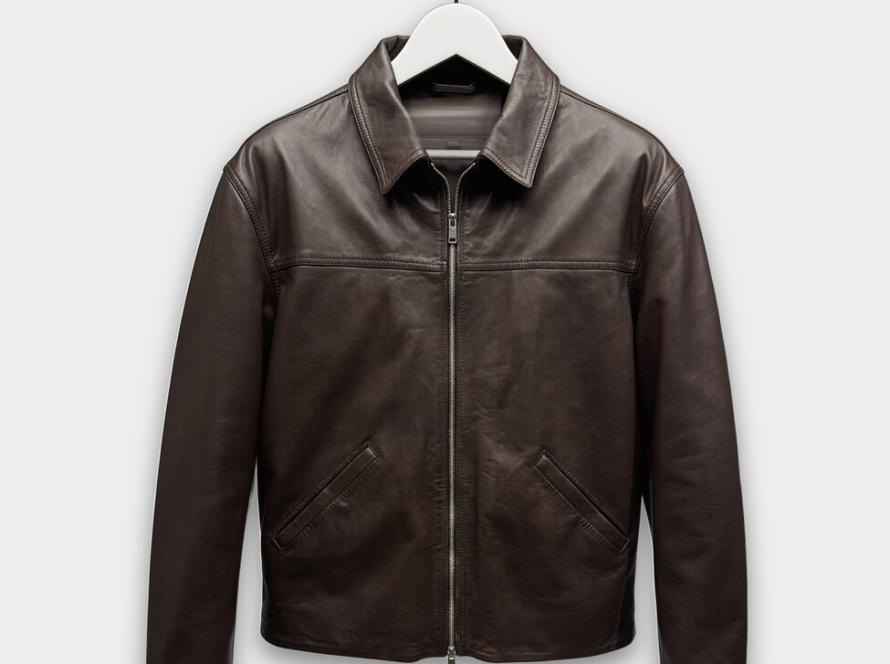

You can start a leather jacket brand today without owning a factory, without a fashion degree and without six figures in the bank. Small minimums and online selling have made that possible. It still isn’t easy. The brands that last are the ones that worked out the costs, the timings and the big decisions before they spent anything.
We’re Mac Leather, a family factory in Karachi, and for 25 years we’ve worked as a private label leather jacket manufacturer for first-time founders and established retailers. What follows is the process as we see it from our side, with real numbers.
What does private label actually mean for leather jackets?
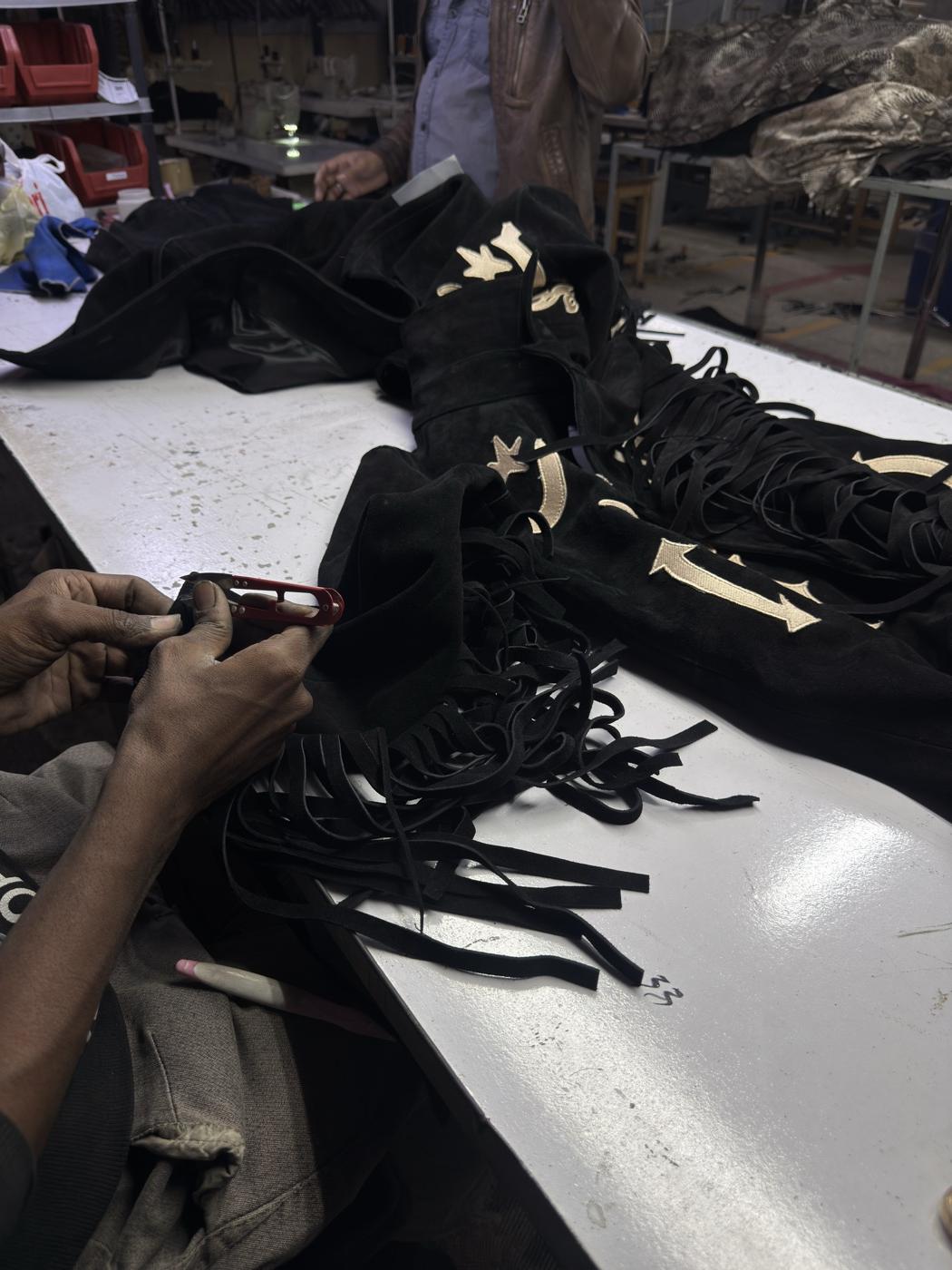
We make the jacket to your design, sew your label in, and you sell it under your name. You decide the design, the branding, the price and where it’s sold. We handle production. Most leather jacket brands you’ve heard of work this way, and a lot of them have never owned a sewing machine.
White label is different. There you buy a finished jacket off the rail and add your label, with no say in the design. At the other extreme you build your own factory. Private label gives you control of the product without the cost of running a production floor.
How much does it actually cost to launch?
Here’s a rough budget for a small first run: two styles, 30 genuine leather jackets in total, say 15 of each split across two colours. Our minimum is 20 pieces per order, mixable across styles and colours, so this is a realistic launch. Treat these as planning ranges, not a quote. The leather and the trims move the number most.
| Cost item | Estimated range |
|---|---|
| Samples (2 styles, 1 to 2 rounds of revision) | $200 to $500 |
| Bulk production (30 genuine leather jackets, mid-range sheepskin or cowhide) | $2,700 to $5,100 |
| Custom labels, hangtags and packaging | $200 to $500 |
| Shipping (a small consignment by air or consolidated sea freight to the UK/EU) | $300 to $700 |
| Import duty (0% into the UK under the DCTS; 0% into the EU under GSP+ for qualifying goods) | $0 |
| Product photography (10 to 15 images per style) | $500 to $1,500 |
| E-commerce website (Shopify or equivalent) | $500 to $2,000 setup |
| Total first-order investment | $4,400 to $10,300 |
Your price per jacket at 20 to 40 pieces will be higher than at 100 or 500, because pattern and cutting time are shared across fewer jackets. That’s what you pay for a small first commitment. These figures are for real leather. PU brings the production cost right down, but it puts you in a different market.
How do manufacturing costs vary by leather quality?
Leather is the biggest single swing in your unit cost. These are realistic FOB (free on board) prices per jacket at current rates:
| Material tier | FOB price per jacket | Typical retail price |
|---|---|---|
| PU / faux leather | $15 to $35 | $60 to $150 |
| Genuine leather (economy grade) | $40 to $75 | $120 to $250 |
| Genuine leather (mid-range sheepskin/cowhide) | $75 to $150 | $250 to $500 |
| Premium leather (fine sheepskin/nappa finish) | $150 to $300 | $450 to $1,000+ |
That’s for standard construction. Heavy hardware, quilted linings or custom-branded parts add $10 to $30 a jacket.
How do minimum order quantities compare across countries?
For a new brand, the minimum often decides everything else. This is roughly how the main sourcing countries compare:
| Country | Typical MOQ | Notes |
|---|---|---|
| Pakistan (Mac Leather) | 20 pieces, mixable | 20 pieces per order, mixable across styles and colours. You can test several designs without betting heavily on one. |
| China | 100 to 300 pcs | Published minimums are often a starting point for negotiation. You can sometimes get lower, but consistency on small runs is a known worry. |
| India | 100 to 200 pcs | Strong in gloves and small leather goods; fewer factories that specialise in jackets than Pakistan or Turkey. |
| Turkey | 100 to 500 pcs | Good reputation, noticeably higher prices. Istanbul factories tend to go lower on minimums but charge more ($90 to $150+ FOB). |
Our 20-piece minimum covers the whole order, not each style or colour. So you can launch with two or three styles and 20 jackets in total, which is a sensible amount of stock to find out whether people buy before you scale. If order size is your main worry, here’s how we work as a low MOQ leather manufacturer.
Step 1: Decide who the brand is for
Answer these before you talk to any factory.
Who’s buying? Think about age and income, and how they live. A brand for 30-year-old city professionals makes different calls on design and price from one for bikers.
What will you charge? That sets your leather. If you want to sell at $300, you need to make the jacket for about $60 to $90 to keep a healthy margin.
Why would someone pick you? “Quality leather jackets” isn’t a brand. A clear look, one material (sheepskin only, say), a niche like jackets for petite women, or a story about sourcing gives you something to build on.
How many styles? We’d say two to four for a first collection. That’s enough to learn what sells without tying up all your cash in stock.
Step 2: Find a manufacturer you can work with
The jacket your customer holds is the factory’s work with your name on it. What we’d check in your position:
- Do they actually specialise in jackets? A bag factory might take a jacket order and still get the fit wrong, because tailoring is a different skill.
- Will they show finished work? A factory that’s confident in its output will send photos without being chased. You can look through our portfolio to see what finished production looks like.
- How quickly and clearly do they reply? You’ll be talking to this team for months. If the first few emails are slow or vague, it gets worse once production starts.
- How do they treat sampling? If someone pushes you to skip the sample and go straight to bulk, walk away.
- Where are they? Location affects duty and lead time, and how close they are to the leather.
- Can you talk to past buyers? Ask for references.
Step 3: Get the designs ready
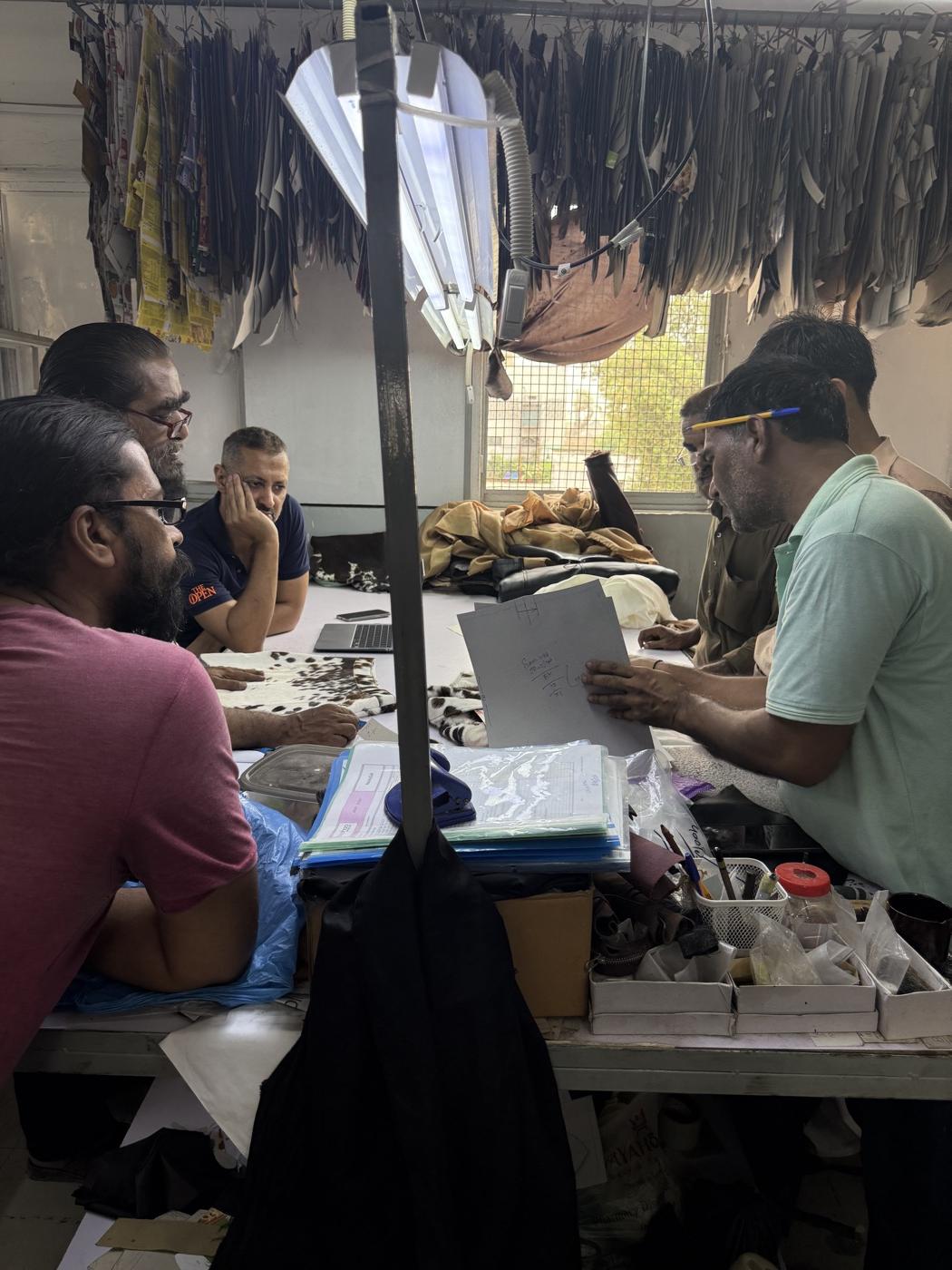
You don’t have to be a designer. If you have a strong, specific vision, you send a full tech pack with every measurement and detail.
Most first-time brands take the middle route. They start from one of our existing patterns and change the collar, pockets, hardware or proportions. It’s quicker and carries less risk.
The fastest and cheapest option is picking a style from our range and adding your branding. You’ll stand out less, but you’ll be selling sooner. We’re happy to work any of the three ways.
Step 4: Order and approve samples
Don’t place a bulk order until you’ve held and approved a physical sample. It’s the only way to judge the leather, the fit and the hardware before you’re committed.
Expect to pay $100 to $250 per sample jacket, depending on complexity and leather. Free samples aren’t really free. The factory makes the money back somewhere, usually in the bulk quality.
Our samples take about 2 weeks for a simple garment and up to 8 weeks for a complicated one, counted from confirmed design.
When it arrives, check:
- how the leather feels and looks, and its weight
- the fit on a person or a dress form, across the sizes you’ll sell
- stitching, which should be even with no wandering lines
- zips and snaps
- the lining and how it’s attached
- the drape, and how the jacket sits on the shoulders
Most orders need one or two rounds of changes before sign-off. Leave room for that in your launch plan.
Step 5: Sort out the branding
Your brand needs to be on the product itself.
- Main label, woven or printed, at the back neck, with your brand name and country of manufacture.
- Care label. Most markets require one by law, and it has to follow local rules (FTC in the US, UK labelling standards, EU textile regulation).
- Hangtags, which carry your story or price.
- Custom hardware such as engraved zip pulls, branded snaps or an embossed logo. These add perceived value and make you harder to copy.
- Packaging: dust bags, tissue, poly bags or boxes, depending on price point and where you sell.
We make these in-house or through local suppliers we’ve used for years. Custom branding usually takes 2 to 3 weeks and runs alongside production.
Step 6: Place the bulk order
With the sample and branding signed off, settle three things.
Size split. A common first-order ratio is 10% S, 25% M, 35% L, 20% XL and 10% XXL. Adjust it to your own data. If you’re mainly online, the extreme sizes come back more often.
Payment. The usual terms are 30% deposit on confirmation and 70% on completion, before shipping. Some factories offer letters of credit on larger orders.
Timing. Bulk typically takes 30 to 45 days after sample approval, plus shipping.
Step 7: Price your jackets
The standard fashion formula multiplies your landed cost (manufacturing plus shipping and duty) by 2.0 to 2.5 to get wholesale, then multiplies wholesale by 2.0 to 2.5 again for retail.
So if a jacket costs you $95 landed (FOB plus shipping plus duty), wholesale is $190 to $238 and retail is $380 to $595. If you only sell direct, a single 4x to 5x markup on landed cost does the same job.
For UK and EU buyers: qualifying leather jackets from Pakistan go into the UK at 0% duty under the DCTS (Developing Countries Trading Scheme) and into the EU at 0% under GSP+. That’s a real saving over China, where standard MFN duty applies, and it puts Pakistan level with Turkey’s customs union with the EU.
Step 8: Decide where to sell
Direct to consumer (highest margin)
Most people start with a Shopify store and good photos. The product page has to do real work: several angles, close-ups of the grain, on-model shots, an honest size guide and a clear returns policy. Expect 10 to 15% of online leather jacket sales to come back.
Wholesale to retailers (volume)
Take a lookbook and a wholesale price list to boutiques and independents. For outerwear, trade shows still work best. MAGIC in Las Vegas, Premiere Vision in Paris, Pure London and White in Milan are the ones that matter for leather.
Marketplaces (discovery)
Amazon, Etsy and ASOS Marketplace bring traffic to a new name. Commission runs 15 to 30%, which hurts margin, but finding customers there often costs less than paid ads.
What are the most common mistakes new leather jacket brands make?
Launching with too many styles is the big one. We regularly see brands try eight or ten in the first order. Start with two to four.
Skipping the sample to save money comes next. Approving bulk from photos or a phone call is how people end up with 200 jackets nobody wants.
Going with the cheapest quote. It’s cheapest for a reason. Weigh up quality, and how well they communicate, alongside price.
Forgetting landed cost. FOB isn’t what the jacket costs you. Add freight, any duty, insurance, customs brokerage and delivery at your end before you set a retail price.
And underpricing because you’re nervous. If it’s a well-made real leather jacket, charge for it. A low price tells people it’s a cheap jacket, and it wipes out your margin.
What does the timeline look like from idea to first sale?
| Phase | Duration |
|---|---|
| Brand development and design | 2 to 4 weeks |
| Manufacturer selection | 1 to 3 weeks |
| Sample development and approval | 3 to 9 weeks (2 to 8 weeks per sample round depending on the style, plus your review) |
| Bulk production | 30 to 45 days after sample approval |
| Shipping (sea freight to EU/UK) | 3 to 4 weeks |
| Photography, website and launch prep | 2 to 4 weeks (overlap with production) |
| Total: idea to first sale | 12 to 20 weeks |
Start now and you could realistically be selling in four to five months.
Start your brand with Mac Leather
We’ve made private label leather jackets for over 25 years, and our family has run the business for three generations. Our minimum is 20 pieces, mixable across styles and colours. Samples take about 2 weeks for simple styles and up to 8 for complicated ones, and qualifying goods go into the UK duty-free under the DCTS and into the EU under GSP+.
Send us your design idea or a few reference images and we’ll come back with a rough price and a production timeline. Or message us on WhatsApp.