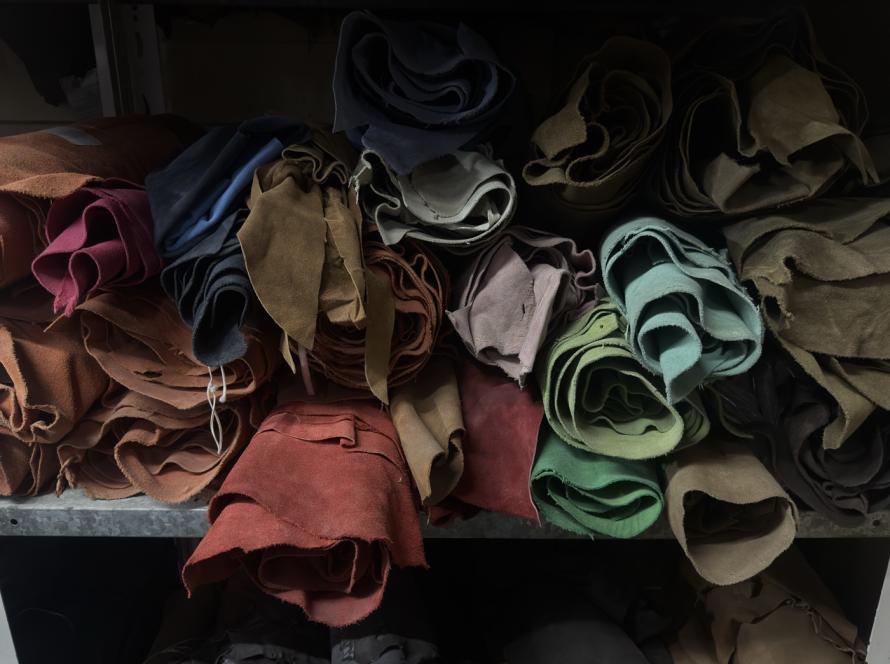

Most of the jackets we cut are sheepskin. A fair number are cowhide. Buyers ask us which is better almost every week, and the honest answer is that it depends on what you’re selling, to whom, and at what price. The leather decides how the jacket feels in the hand, how it hangs, what it weighs, how long it lasts and what it costs you. So it’s a commercial decision as much as a design one.
We’re Mac Leather, a leather garments manufacturer in Pakistan, three generations in Karachi. Here’s how the two compare from the cutting table, including the parts that don’t show up on a spec sheet.
Sheepskin: what you get
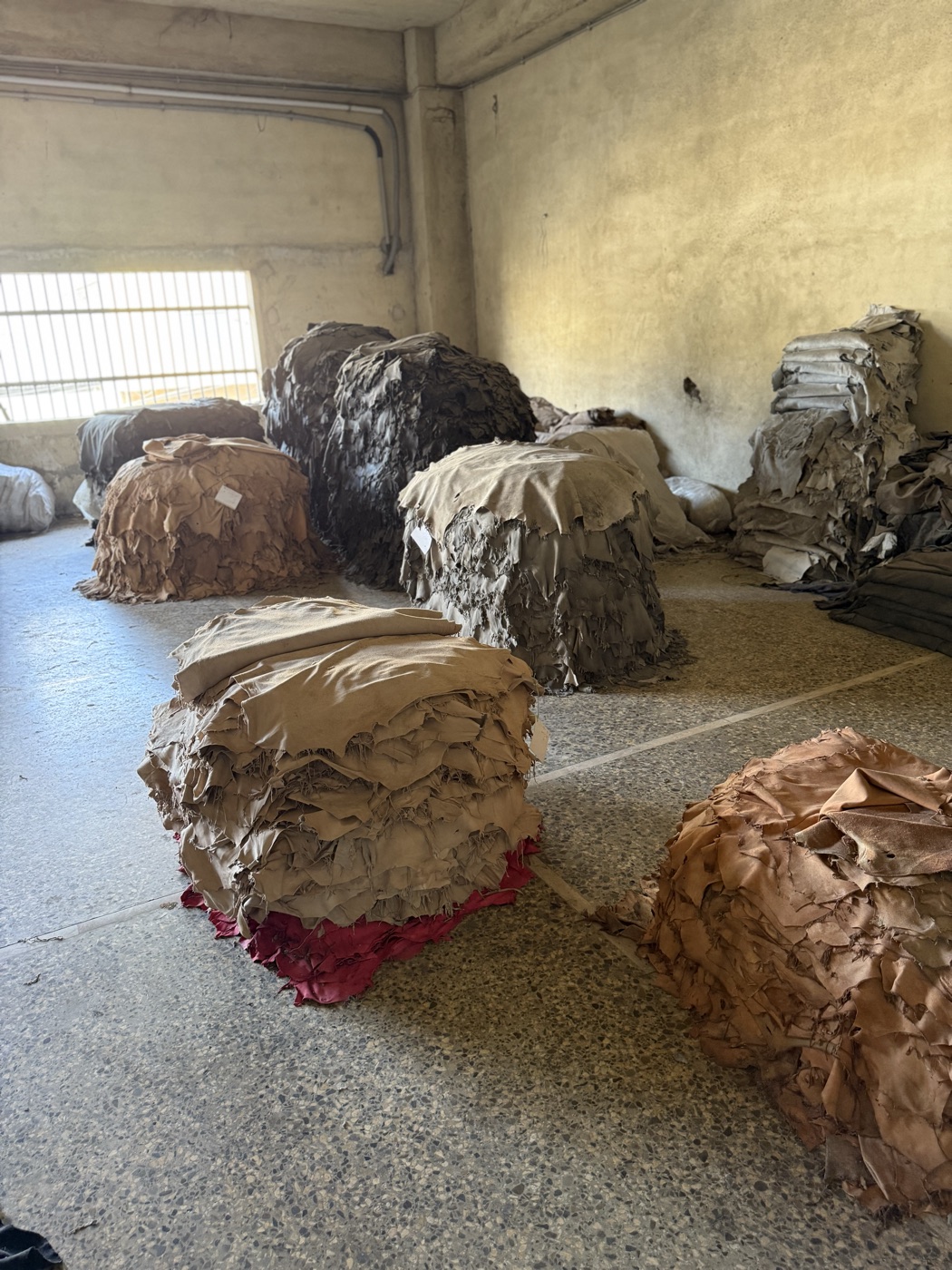
Garment sheepskin is chrome-tanned hide from adult sheep, and it’s the default leather for fashion jackets in Pakistan. There’s a lot of it. The 2024-25 Economic Survey puts the national flock at over 33 million, and the Karachi tanneries work through skins in huge volumes, so supply is steady and the price is competitive.
It’s softer and lighter than cowhide, with a fine, even grain that takes dye well. There’s enough body to hold the shape of a jacket and enough give that it moulds to the wearer within a few wears.
The numbers we work to:
- Thickness of 0.6 to 1.0 mm depending on grade and finish, which covers almost everything from bombers to cafe racers.
- A standard jacket weighs roughly 1.2 to 2.0 kg. People forget they’re wearing it.
- The grain is tighter than goatskin and much less pronounced than cowhide.
- It drapes and moves with the body. It won’t hold a rigid shape.
- The fibre structure gives it natural stretch, which is where that supple feel comes from.
- It breathes well, so it’s comfortable over a wider temperature range than you’d expect.
- It scratches more easily than cowhide. Finished properly and looked after, a sheepskin jacket still gives 10 to 15 years of regular wear.
Cowhide: what you get
Cowhide is the most widely used leather in the world, in everything from shoes to car seats. In a jacket it makes a heavier, stiffer garment that takes far more abuse before it shows it.
Pakistan has about 59.7 million cattle, so there’s plenty of local cowhide, though some grades still come in from South America and elsewhere.
- Garment-weight cowhide runs 1.0 to 1.4 mm. Motorcycle and workwear jackets go heavier, 1.4 to 2.0 mm.
- A jacket comes in at 2.0 to 3.5 kg. You feel it on your shoulders.
- The grain is pronounced and picks up character as it ages.
- It’s stiff at first and takes several weeks of wear before it moulds to the body.
- There’s very little stretch, so the fit has to be right off the pattern. You can’t rely on the leather giving.
- The denser fibre means it breathes less than sheepskin.
- It shrugs off scratches, scuffs and rain. Looked after, a cowhide jacket lasts 20 to 30 years.
Sheepskin and cowhide side by side
| Property | Sheepskin | Cowhide |
|---|---|---|
| Thickness | 0.6 to 1.0 mm | 1.0 to 1.4 mm |
| Weight per jacket | 1.2 to 2.0 kg | 2.0 to 3.5 kg |
| Softness (out of the box) | Soft and comfortable straight away | Firm, needs breaking in |
| Grain character | Fine and even | Pronounced, develops patina |
| Drape | Fluid, follows the body | Holds its shape |
| Scratch resistance | Low to moderate | High |
| Abrasion resistance | Moderate | Very good |
| Break-in period | 1 to 3 wears | Weeks to months |
| Lifespan with care | 10 to 15 years | 20 to 30 years |
| Temperature regulation | Good | Moderate |
| Best jacket styles | Bombers, cafe racers, blazers, slim-fit | Bikers, aviators, moto, workwear |
| Price positioning (retail) | Mid to premium ($200 to $600) | Entry to mid ($150 to $450) |
| Manufacturing cost | Higher per sq ft (smaller hides) | Lower per sq ft (larger hides, less waste) |
Which leather suits which jacket
We try to steer brands by what the jacket has to do and where it sits on the shelf, not by what someone on the team happens to like.
Where sheepskin wins
Bombers and cafe racers, first of all. Those styles depend on a clean drape and a light jacket, and cowhide fights both. Most of the womenswear we make is sheepskin too, because women’s buyers keep coming back to the lighter weight and the softness on day one.
Slim and tailored cuts look better in it. The thinner leather gives flatter seams and a neater line. And if your brand sells on looks and comfort, or you want a jacket people can wear over a jumper or a blazer without feeling weighed down, sheepskin is the obvious pick.
Where cowhide wins
Biker and moto jackets. The stiffness holds lapels, epaulettes and belts in place, which matters for riders and also just looks right on that silhouette. Workwear and heritage labels like it because the grain ages into the worn-in look their customers are paying for.
It’s also the cheaper route for price-led collections. A big cowhide wastes less at cutting and costs less per square foot. Menswear with a lot of heavy hardware, like chunky zips, buckles and studs, sits better on cowhide as well.
Which sheepskin grade should you choose?
Sheepskin covers a spread of grades. At the fine end is skin from younger animals, around 0.5 to 0.8 mm. It’s softer than standard garment sheepskin, with a tighter grain. It’s what we’d suggest for jackets retailing above $500, where the first touch in the shop has to sell it.
It has downsides. Fine skin is more delicate, costs more per square foot, and the smaller skins mean more waste on the cutting table. At the other end, heavier sheepskin (0.9 to 1.1 mm) gives the jacket more body and handles scuffs better while keeping the drape. For most mid-range collections, standard or heavier garment sheepskin is where the numbers work. We can send swatches of each so you can feel the difference yourself.
How does leather choice affect your cutting yield?
First-time buyers rarely think about this, and it moves the price more than they expect.
A sheepskin gives about 5 to 7 square feet of usable leather. A cowhide gives 40 to 50. A jacket needs roughly 15 to 20 square feet depending on the style. So one cowhide makes two or three jackets, while one jacket eats three or four sheepskins. All that extra cutting, sorting and shade-matching across skins is labour, and it’s why sheepskin jackets cost more to make even when the leather price per square foot is similar.
How do care requirements differ for sheepskin and cowhide jackets?
This affects returns and the care advice you pass on to your stockists, so it’s worth knowing before you choose.
Sheepskin wants a wide padded hanger, somewhere cool and dry, and no direct sun, which fades the colour. A leather balm every 6 to 12 months keeps it supple. It water-marks more easily than cowhide, so customers should avoid heavy rain or use a waterproofing spray. The upside is that light scratches often rub out with a thumb, thanks to the natural oils in the skin.
Cowhide is much more forgiving. Daily wear, a bit of rain, being thrown on a chair: it copes. Conditioning every 6 to 12 months is still a good idea, but it survives neglect far better.
If you sell through marketplaces or wholesale to independent shops, where nobody is there to explain aftercare, cowhide means fewer unhappy customers. If you sell direct and put effort into care guidance, sheepskin pays that back with a feel cowhide can’t match.
How should you choose between sheepskin and cowhide for your line?
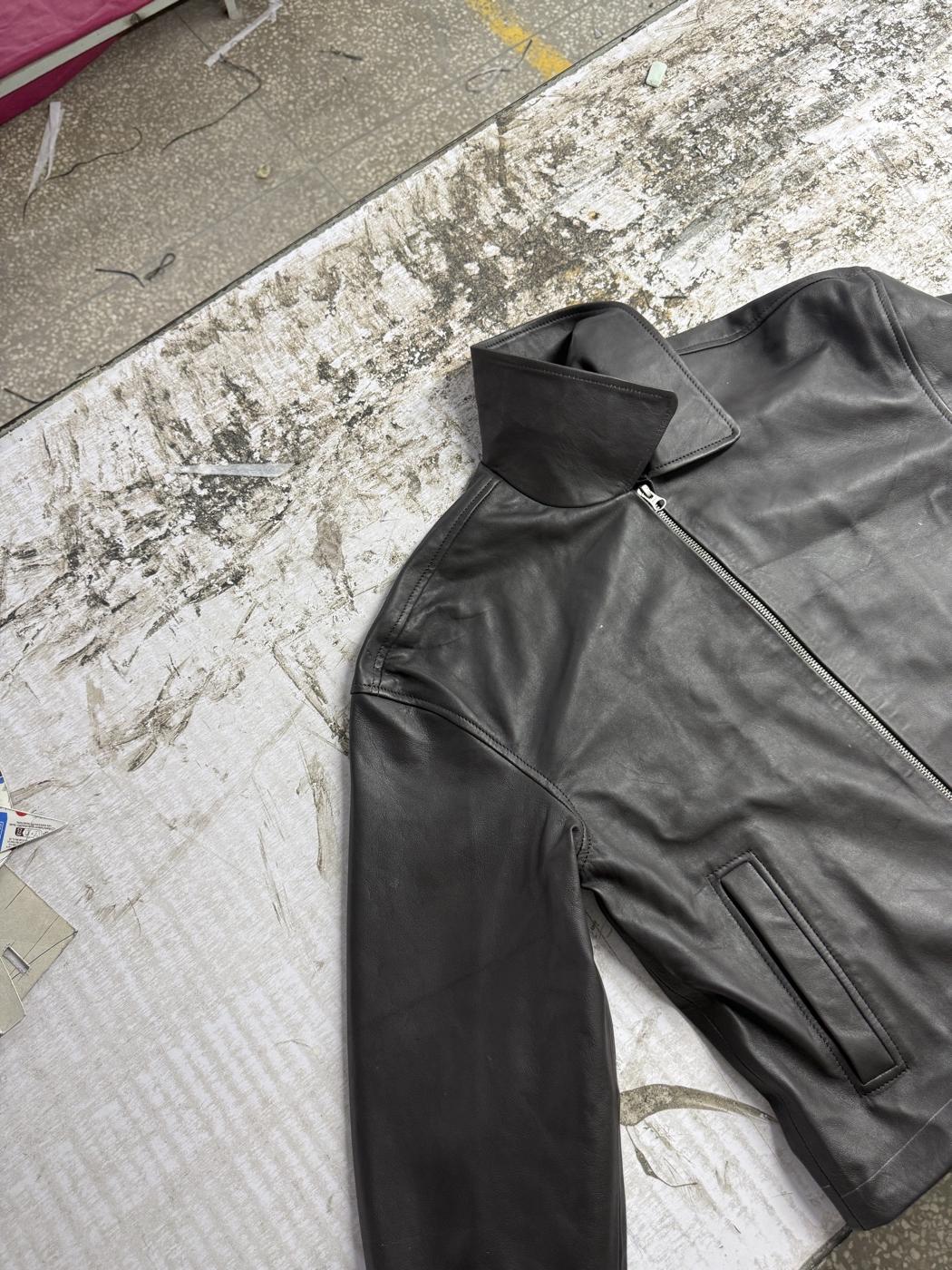
Start with the retail price. Below about $250, cowhide leaves you more margin. Above $300, the feel of sheepskin earns its extra cost.
Then think about the customer. Fashion buyers want softness and drape. Riders and people buying for hard wear want cowhide. Match the leather to the style, too. Sheepskin in a heavy biker cut, or cowhide in a slouchy bomber, works against the material every time.
Where you sell matters more than people think. In a shop the customer can touch it. Online you’re relying on photos and copy. Sheepskin photographs with a smoother, cleaner surface, and cowhide shows more grain.
Plenty of brands we make for run the same style in both: sheepskin as the top tier, cowhide as the entry price. You get two price points from one pattern.
How we work with both materials at Mac Leather
We buy sheepskin and cowhide straight from tanneries in Korangi, Karachi’s tannery district, where about 250 tanning units sit close together. We can have leather the same day, ask for custom finishes and colours, and check hides at the tannery before they reach us.
Through our private label programme you choose the leather type, thickness, finish and colour for every order, and you get a pre-production sample in that leather before bulk. Our minimum is 20 pieces per order, mixable across styles and colours, so you can put one sheepskin style and one cowhide style in the same run and see which sells.
Not sure which way to go? Ask for a leather swatch kit with both materials in a few finishes, or send us a message on WhatsApp.