

Most leather outerwear sold anywhere is one of two shapes: the bomber or the biker. If you’re buying wholesale leather jackets, one or both will probably be the backbone of your range. Buyers ask us all the time which one sells better. It depends on your market, but after 25 years of making both there are some clear patterns, and they’re worth knowing before you put money down.
We make bombers and bikers every day at our factory in Karachi. Here’s how they compare on build, cost, customer and sell-through.
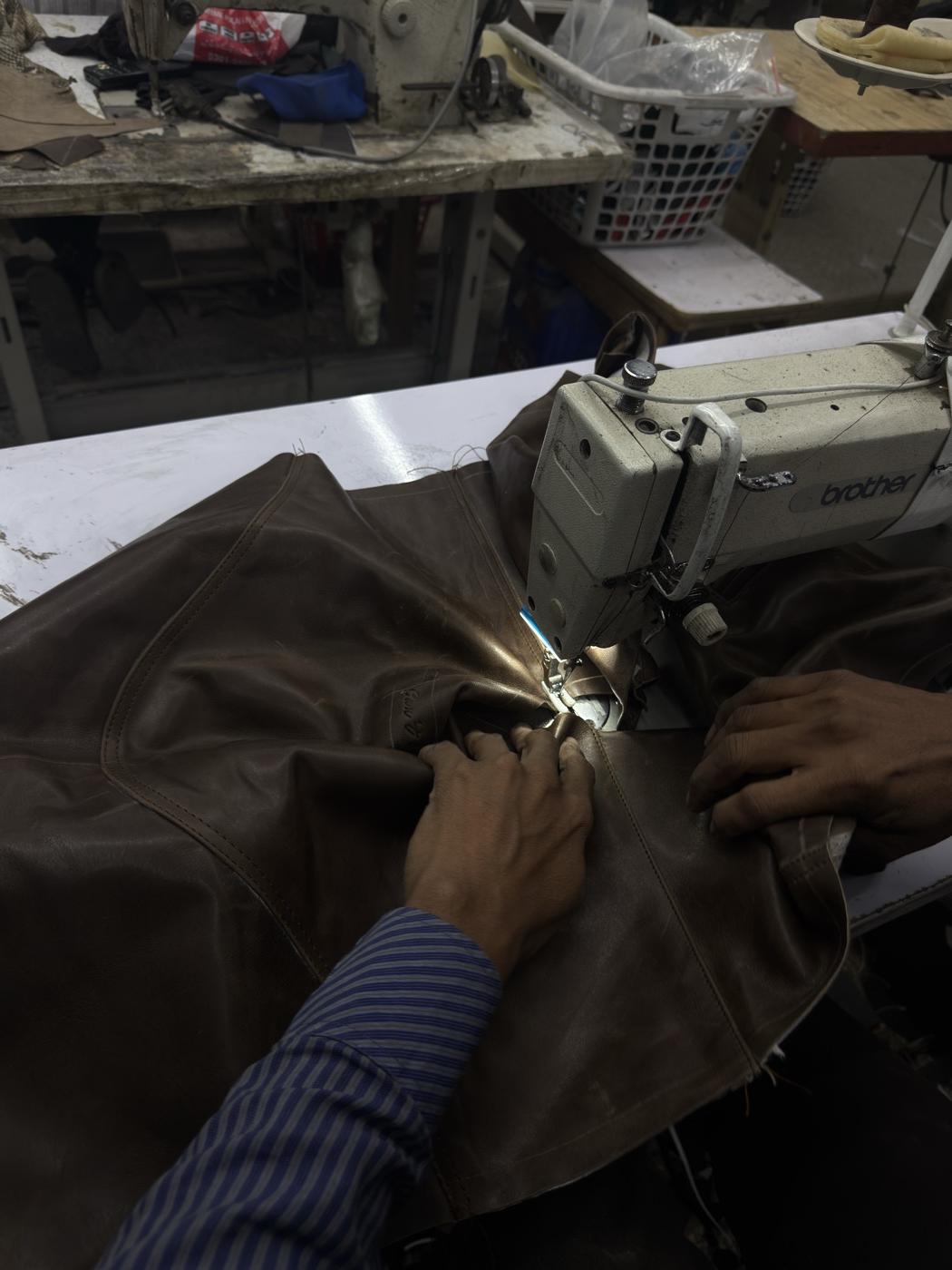
What defines a bomber jacket?
The bomber comes from the A-2 flight jacket the US Army Air Corps adopted in 1931. Pilots in unpressurised cockpits needed something warm that didn’t get in the way. The design has hardly changed in nearly a hundred years: a straight centre-front zip, ribbed knit at the cuffs and hem to keep the wind out, a simple collar (stand-up band or shirt style) and a relaxed body.
Construction details
- One centre-front zip, usually a single YKK from hem to collar.
- A band collar or shirt collar. Aviator versions sometimes get a fur or shearling collar.
- Ribbed knit cuffs and hem. More than anything else, these make it a bomber. They give that slight blouse over the waistband and a snug fit at the wrist.
- Two welt or flap pockets at the waist. Some add an inside pocket and a utility pocket on the sleeve, which comes from the MA-1 military spec.
- Very little hardware. One zip, maybe two to four snaps. No belts, buckles or epaulettes.
- 12 to 18 pattern pieces. It’s a fairly simple build.
- 2.5 to 4 hours of stitching per jacket, depending on the lining and pockets.
A bomber is all restraint: clean lines, not much metal, a shape that suits most bodies.
What defines a biker jacket?
Irving Schott designed the biker jacket for motorcyclists in 1928. His Perfecto introduced the asymmetric zip, wide notched lapels that snap down, a belted waist and zipped pockets everywhere. Marlon Brando wore one in “The Wild One” in 1953, and the design has barely moved since, because it didn’t need to.
Construction details
- An asymmetric zip running diagonally from the left hip towards the right shoulder. It’s the thing everyone recognises.
- Wide notched lapels with snaps. Worn open, or snapped up to the throat against the wind.
- Zipped cuffs instead of ribbing, so a rider can get gloves over or under the sleeve.
- A full belt with a buckle, or a half-belt with side adjusters, which gives the nipped-in waist.
- Three or four zipped pockets (one chest, two waist, sometimes one inside). Some designs add a coin or flap pocket.
- A lot of hardware. Five to eight zips, snaps on the lapels and epaulettes, D-rings, a buckle and rivets at stress points. The metal alone can weigh 400 to 600 grams.
- Often quilted panels on the shoulders, elbows or lower back, a nod to where motorcycle armour sits.
- 20 to 30 pattern pieces, far more than a bomber.
- 4 to 6 hours of stitching. The asymmetric front, all those zips, the belt and the snap setting add up.
How do manufacturing costs compare?
A biker costs more than a bomber to make at every stage. This is where the difference comes from:
| Cost factor | Bomber | Biker |
|---|---|---|
| Leather consumption | 10 to 13 sq ft | 12 to 16 sq ft |
| Zip count | 1 to 3 | 5 to 8 |
| Hardware cost per jacket | $2 to $5 | $8 to $18 |
| Labour hours (stitching) | 2.5 to 4 hrs | 4 to 6 hrs |
| Pattern complexity | 12 to 18 pieces | 20 to 30 pieces |
| Ribbing / belt cost | $3 to $5 (knit ribbing) | $4 to $8 (leather belt + buckle) |
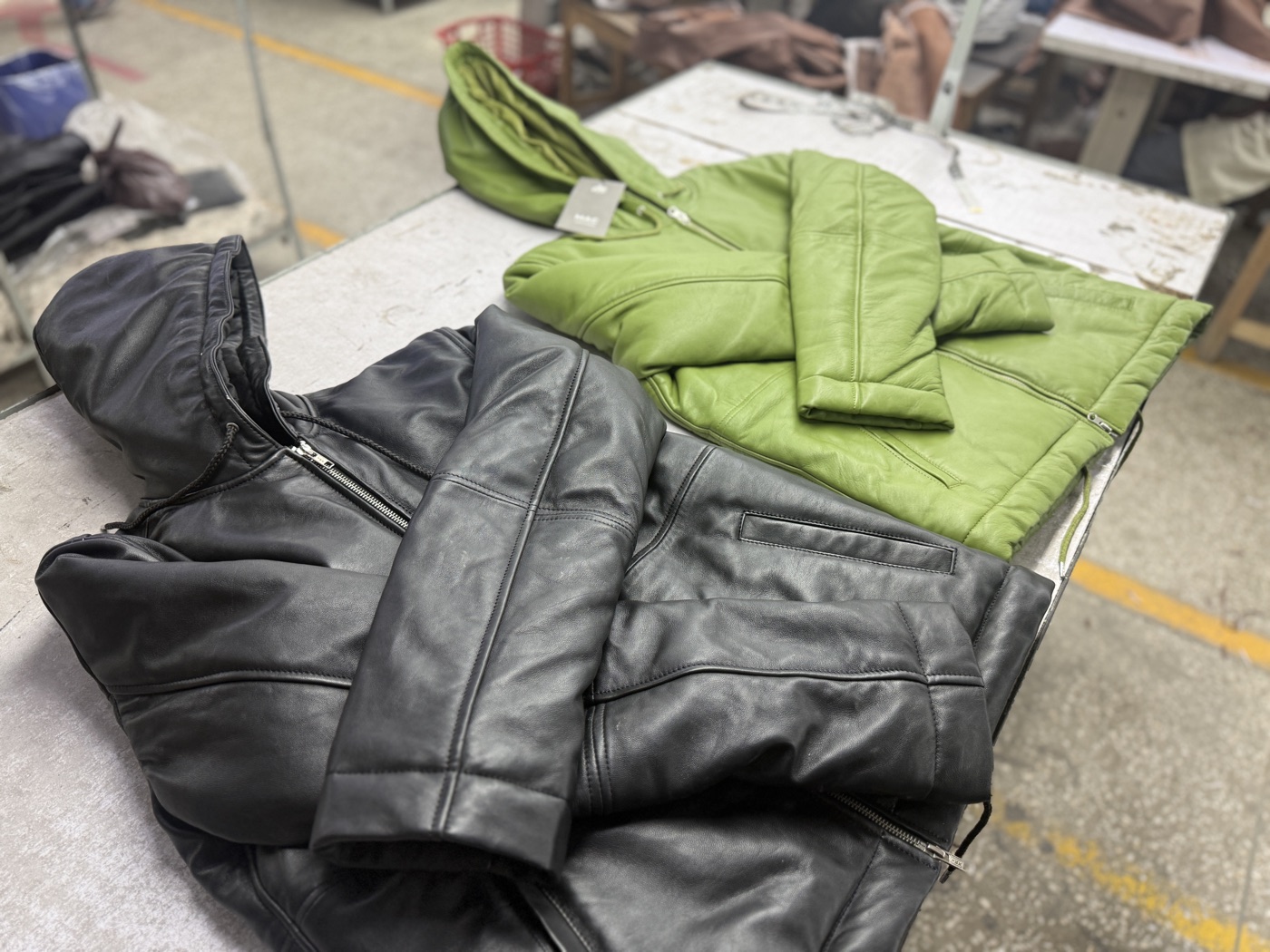
In the same leather and grade, a biker costs 15% to 30% more to make. If a sheepskin bomber costs $70, the same biker in the same sheepskin is $80 to $95. Cowhide shows a similar percentage gap, but the actual figures are higher because cowhide bikers usually use thicker, heavier hides.
Who buys bomber jackets?
The bomber appeals to more people than any other leather jacket. It’s a wardrobe basic, not a statement.
Buyers range from about 20 to 55. Younger customers wear it as streetwear, older ones as a smart casual layer. It does well in both menswear and womenswear because the relaxed fit suits most shapes. It works with jeans or with a shirt and proper trousers.
Price isn’t a barrier either way. There’s a market for a $150 cowhide bomber and for a $600 sheepskin one. And bomber customers often come back for a second colour. Black first, then brown, then navy or olive. For a wholesale buyer, that repeat business matters.
Who buys biker jackets?
The biker has a smaller following, but a keener one. People buy it as the main event, not something to layer.
The customer is younger, roughly 18 to 45, and more fashion-led. It sells to both men and women but it’s especially strong in womenswear, where the fitted, cropped biker is one of the best-selling outerwear shapes anywhere. The look is rock, punk and street, and people who buy one have chosen that look on purpose.
Biker customers will usually pay more. All that construction and hardware makes a higher price feel fair to them. They buy less often, though. Most buy one and wear it for years, so you make more per jacket but sell fewer jackets per customer over time.
Which style sells more units at wholesale?
This is what we’ve seen on our own production floor over 25 years.
Bombers outsell bikers on units by roughly 60 to 40, because more people want one. Bikers sell for 20% to 35% more at retail, because of the build, the hardware and where they sit in fashion. Put those together and revenue per style usually comes out close, within 10% to 15% of each other. Bombers win on volume, bikers on margin.
Women’s bikers do better than men’s. The cropped, fitted biker is the women’s style we’re asked for most. And if you look at single SKU types, sheepskin bombers are our biggest seller by volume: soft, light, easy to wear, and priced in the middle where most customers are.
Which leather works best for each style?
Bomber jacket materials
Bombers are forgiving. The simple build works with almost any type of leather. What we make most:
- Sheepskin, by far the most requested. Soft and light, with a lovely drape. Right for the $200 to $450 retail bracket.
- Cowhide gives a tougher, vintage feel. It’s heavier and more structured, and it suits the workwear end of the market.
- Suede in sheep or goat is good for spring and summer. The matte surface and lighter shades look great in a bomber shape.
- Shearling makes the aviator bomber, with a shearling lining and collar. It’s a winter piece and sells through well in colder markets.
Biker jacket materials
A biker needs leather with enough body to hold the lapels and keep the shape.
- Cowhide is the traditional choice. It keeps the lapels crisp and ages well, and most men’s bikers use it.
- Sheepskin works for women’s bikers where a softer feel is wanted. Go a bit heavier, 0.8 to 1.0 mm, or the lapels won’t stand up.
- Buffalo is heavier still and very hard-wearing. It’s a top-end option for heavyweight bikers aimed at people who actually ride.
- Fine sheepskin from younger animals is the softest option. It needs careful construction or the lapels go floppy. For bikers we’d use 0.7 to 0.8 mm.
How should you position both styles in your collection?
The best collections we make usually have one of each.
The bomber is the way in. It’s cheaper to make, so it retails lower and brings new customers to the brand. Think of it as the “try us” jacket. The biker is the hero piece: higher price, better margin, and it’s the jacket that makes the lookbook.
On colour, offer bombers in four to six (black, brown, tan, navy, olive, burgundy) and bikers in two or three (black and dark brown, maybe one seasonal colour). That’s how people actually shop each style. And photograph them differently. Bombers look right in relaxed, everyday settings. Bikers want moodier, more editorial shots.
What are the popular sub-styles to consider?
Bomber variations
- MA-1. The classic military bomber, clean and simple. It moves from nylon to leather without any trouble.
- Aviator or shearling. Shearling collar and lining, higher price, strong in autumn and winter.
- Suede bomber. Softer and more casual, popular for in-between seasons.
- Oversized bomber. Selling well in streetwear and womenswear, in leather and in vegan leather.
Biker variations
- Classic double rider. The Perfecto shape with the asymmetric zip, wide lapels and belt. It was first and it’s still the best seller.
- Cafe racer. A stripped-back biker with a band collar and centre zip, for people who find the full biker too much.
- Quilted biker. Quilting on the shoulders or sleeves, very popular in womenswear.
- Collarless biker. Drops the lapels but keeps the asymmetric zip, so it’s cleaner and easier to wear.
How does Mac Leather handle both styles in production?
We regularly make bombers and bikers for the same buyer in one run. You choose the leather type and weight, the lining, zip brand, hardware finish, label placement and packaging. Our minimum is 20 pieces per order, mixable across styles and colours, so you could start with 12 bombers in two colours and 8 bikers and test the market on 20 jackets in total.
We already have base patterns for every variation above. Changing the details on one of those is quicker and cheaper than drafting from nothing.
Send us your tech pack or reference images and we’ll price it, or message us on WhatsApp. You can also see bombers and bikers we’ve made in our portfolio.