

Pakistan exported about $683.5 million of leather in FY2024-25, which makes it one of the country’s biggest export trades. There are over 800 tanneries, more than 500,000 people work in the leather supply chain, and the national herd is well over 200 million animals. That’s what sits behind the jackets and gloves Pakistan ships to Europe and the US, and further afield to Japan and the Gulf.
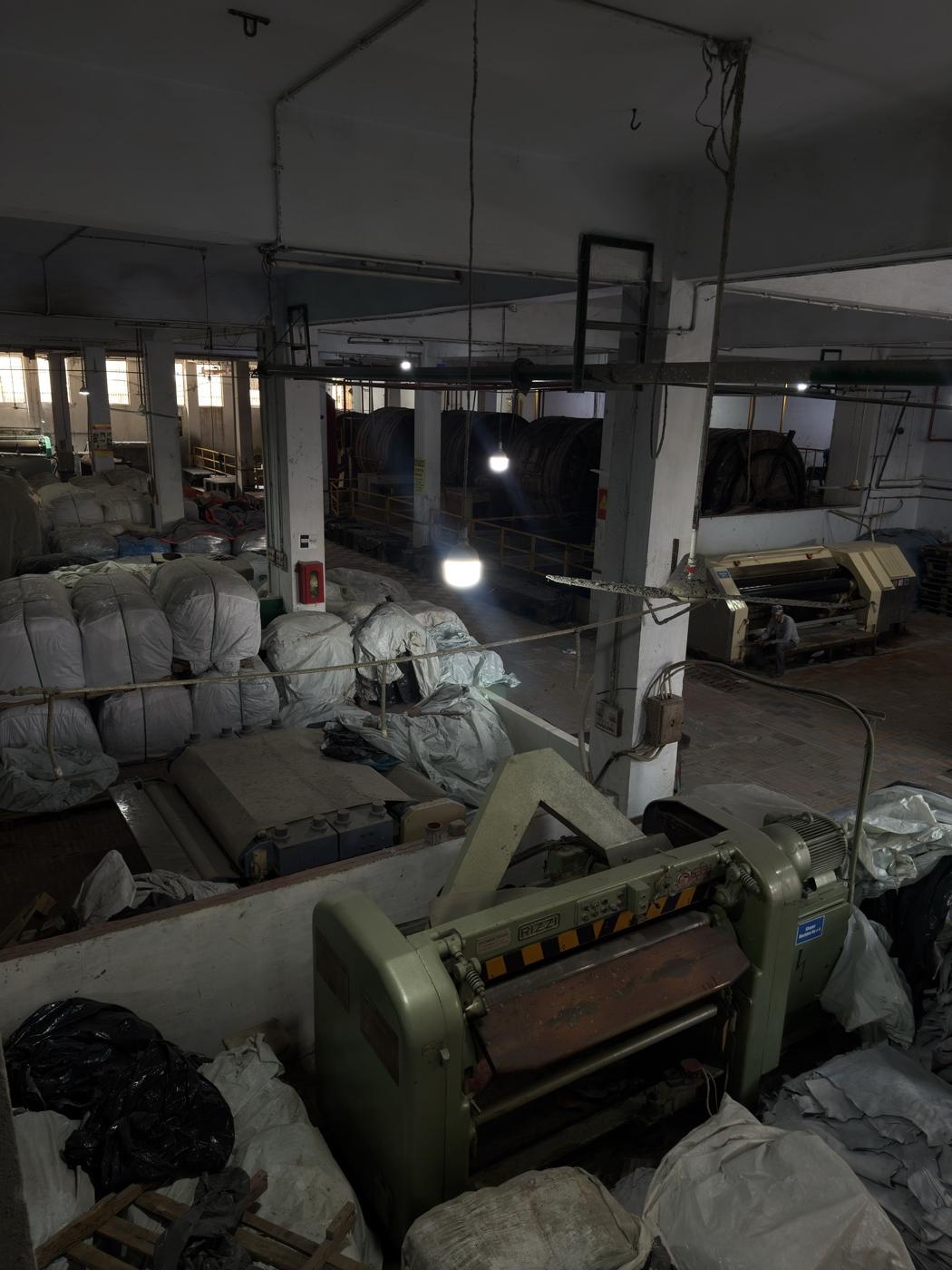
We’ve worked in this trade for over 25 years as a leather jacket manufacturer in Pakistan, from our own factory in Karachi. This piece covers why brands come here for jackets: duty, cost, the three leather cities, and how Pakistan compares with the other big sourcing countries. We’ve tried to be straight about where other countries do better.
What duty advantages does Pakistan offer UK and EU buyers?
For UK and EU buyers, duty is usually the first reason. It’s a saving you can put a number on for every shipment. The UK and the EU run separate schemes, so it’s worth being exact about which is which.
UK: DCTS (Developing Countries Trading Scheme)
After Brexit the UK set up its own preference scheme, the DCTS, in place of the EU arrangements. Pakistan sits in the Enhanced Preferences tier, so qualifying leather goods, jackets included, go into the UK at 0% import duty as long as they meet the rules of origin. GSP+ has nothing to do with UK imports. For the UK, it’s the DCTS.
EU: GSP+ (Generalised Scheme of Preferences Plus)
Pakistan has had GSP+ status with the EU since January 2014. Leather garments (HS 4203) from Pakistan go into EU member states at 0%. A country without preferences pays the standard MFN rate, around 4% for leather garments.
On 500 jackets at $100 FOB each, that’s roughly $2,000 saved on a $50,000 order. Over several orders a year it adds up, and it comes straight off your costs.
The European Commission reviews Pakistan’s GSP+ status from time to time. The latest monitoring assessment was in November 2025. The scheme gives preferential access on 66% of EU tariff lines. Our guide to UK DCTS and EU GSP+ duty-free leather goes through both schemes and the paperwork.
How does this compare to other sourcing countries?
| Sourcing country | UK import duty on leather jackets | EU import duty on leather jackets |
|---|---|---|
| Pakistan | 0% (DCTS, qualifying goods) | 0% (GSP+) |
| Turkey | 0% under the UK-Turkey trade agreement, if rules of origin are met | 0% (Customs Union) |
| China | ~4% MFN | ~4% MFN |
| India | Variable (DCTS standard preferences; the UK-India trade agreement may change this once in force) | Product-specific (standard GSP) |
Pakistan and Turkey are level on duty for both the UK and the EU, and both beat China. Between the two of them it comes down to price, lead time and leather.
Why does Pakistan produce good leather?
Good leather starts with a steady supply of hides, and Pakistan has one of the biggest herds in the world. The Economic Survey 2024-25 counts:
- goats, 89.4 million
- cattle, 59.7 million
- buffalo, 47.7 million
- sheep, 33.1 million
- 229.9 million animals in total
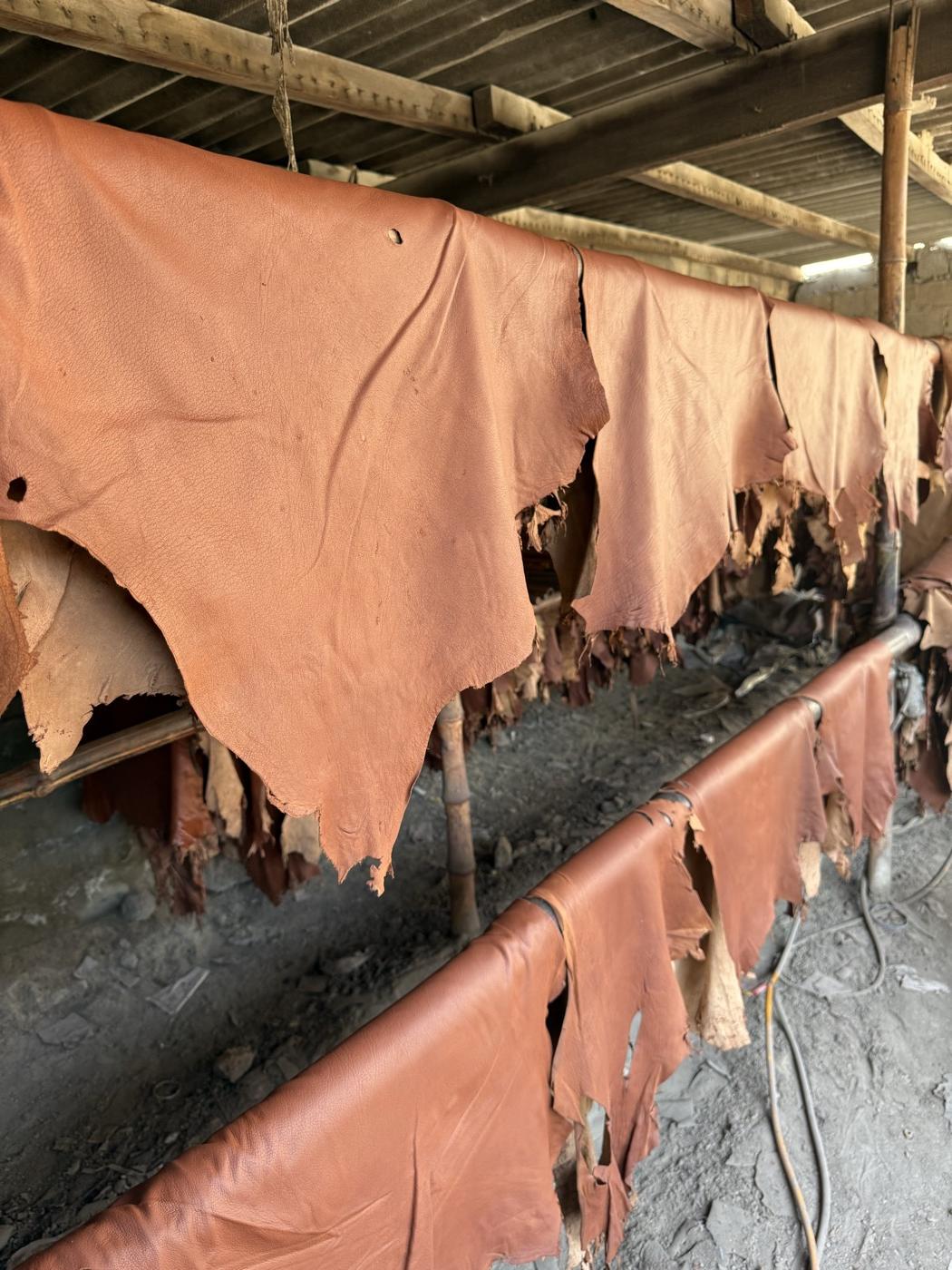
So tanneries here work with local hides and don’t have to import raw stock or wait for it. In Karachi a hide can go from abattoir to tannery to garment factory without leaving the city.
Sheepskin: Pakistan’s particular strength
Pakistani sheepskin has a good name for garments. The local breeds give a fine, even grain with decent stretch, which chrome-tans well into soft leather that drapes. It usually finishes at 0.6 to 1.0 mm, which is where you want it for a jacket.
Goatskin is the other local speciality. It has a tight grain and wears well, and it’s used a lot for gloves, light jackets and small leather goods.
Karachi, Sialkot or Lahore: which leather cluster fits your product?
Leather garment making in Pakistan is concentrated in three cities, and they’re quite different. Knowing which is which saves you talking to the wrong kind of factory.
| Cluster | What it is known for | Strengths | Things to check |
|---|---|---|---|
| Karachi | Tanning (Korangi and SITE), fashion leather garments, bags, export production | Tanneries on the doorstep, Pakistan’s main seaport, lots of choice in sheepskin, cowhide and suede finishes | Ranges from large exporters to small workshops; ask to see the actual stitching floor |
| Sialkot | Sports goods, gloves, motorcycle suits and biker jackets | Deep skill base in protective and sports leatherwear; many small export units | Inland, so goods travel by road to Karachi or by air; fashion garments are a smaller share of output |
| Lahore | Leather garments, footwear, textiles; tanneries nearby in Kasur | Strong garment and textile tradition, good access to trims and fabrics | Tanning is outside the city, so leather sourcing and colour matching can take longer |
For fashion jackets in sheepskin, cowhide or suede, it’s hard to beat Karachi, with the tanneries and the port in one place. For motorcycle and protective wear, Sialkot is the specialist.
What is the Korangi leather cluster and why does it matter?
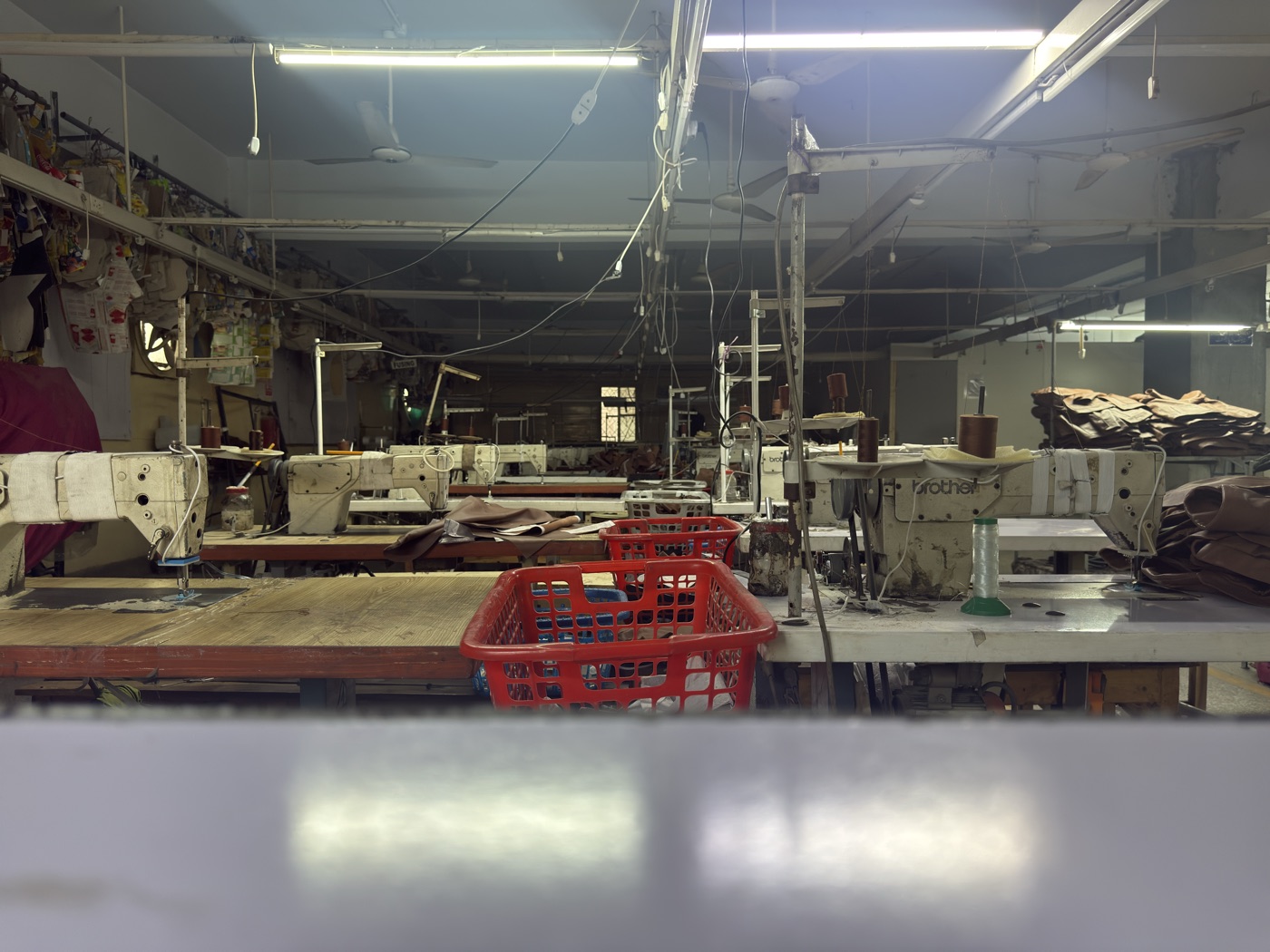
Korangi Industrial Area in Karachi, Sector 7A mainly, has about 250 to 260 tanning units. It’s the biggest leather processing cluster in the country. Together with the SITE area next door, it turns out an estimated 90% of Pakistan’s tanned leather.
Being a jacket factory in the middle of that makes a real difference to how we work. We can go to a tannery, look at the leather and have it on our floor the same day. If a buyer wants a particular burgundy or a flat matte finish, our tanneries will make custom colours in quantities as small as 100 square feet. We check hides before we buy, so bad ones never reach the cutting table. And when a shade is off or a batch isn’t up to spec, we sort it out face to face, usually within a day.
The hardware suppliers, lining merchants, zip distributors and label printers are all nearby too. That’s why Karachi factories can keep lead times competitive even though Europe and America are a long way off.
The environmental side has improved a lot. The Combined Effluent Treatment Plant, which cost about RS 492 million, treats up to 43,000 cubic metres of tannery waste water a day. The better tanneries in the cluster hold, or are working towards, Leather Working Group (LWG) certification and recognised environmental and social standards.
How does Pakistan compare with China, India and Turkey?
| Factor | Pakistan | China | India | Turkey |
|---|---|---|---|---|
| UK import duty | 0% (DCTS, qualifying goods) | ~4% MFN | Variable (DCTS) | 0% (UK-Turkey agreement, rules of origin apply) |
| EU import duty | 0% (GSP+) | ~4% MFN | Product-specific (GSP) | 0% (Customs Union) |
| Typical MOQ | 20 to 100 pcs (Mac Leather: 20 per order, mixable) | 100 to 300 pcs | 100 to 200 pcs | 100 to 500 pcs |
| FOB price range (mid-range jacket) | $75 to $130 | $60 to $120 | $65 to $125 | $90 to $180 |
| Bulk production lead time | 30 to 45 days after sample approval | 4 to 8 weeks | 5 to 8 weeks | 3 to 6 weeks |
| Sea freight to EU (days) | 20 to 30 | 25 to 35 | 18 to 28 | 5 to 10 |
| English communication | Good (English is the business language) | Variable (often requires agents) | Good | Moderate to good |
| Leather sourcing | Domestic (200M+ livestock) | Mostly imported hides | Domestic (large livestock) | Domestic and imported |
| Primary leather strength | Sheepskin, goatskin | PU, bonded, some genuine | Goatskin, buffalo | Sheepskin, fine nappa |
Pakistan vs China
China wins on volume for most things, but a leather jacket isn’t a T-shirt. Each hide has to be looked at and cut by hand, and assembly is slow, careful work. Automation and scale, which is where China is strongest, don’t help much there. A lot of Chinese factories have also moved towards PU and bonded leather, and genuine leather quality varies widely from one to the next. For UK and EU buyers there’s also the roughly 4% duty on Chinese leather garments, which qualifying Pakistani goods don’t pay.
Pakistan vs India
India has a big, long-established leather industry, centred on Chennai (Ambur and Vaniyambadi), Kanpur and Kolkata, and some Indian products get reduced EU duty under standard GSP. The differences are practical. Jacket making in Pakistan is more concentrated, with tanneries and factories side by side in Korangi, and lower minimums make Pakistani factories easier for small brands to work with. India leans more towards gloves, small leather goods and footwear than outerwear.
Pakistan vs Turkey
Turkey makes very good leather garments. It’s also close to Europe, 5 to 10 days by sea against our 20 to 30, and it’s in a customs union with the EU. The catch is cost. Turkish production usually runs 30 to 50% above the equivalent in Pakistan. If speed to market is what matters most to you, Turkey is a good choice. If you care more about what you get for the money and can plan your calendar around a longer voyage, Pakistan is better value.
What about workforce and craftsmanship?
A lot of Pakistani leather workers start as apprentices in their mid-teens. By the time they’re running a section, many have 15 to 20 years at the bench. That kind of depth takes generations to build, and countries that came to leather garments more recently don’t have it yet.
Several of our senior craftsmen have been with us for over ten years. They know how different leathers behave, they adjust to each hide, and they keep a run consistent from the first jacket to the last. That’s what lets us make for brands in Europe, North America and the Middle East.
The industry employs over 500,000 people directly. Millions more work around it: livestock, hide trading, chemicals, transport.
What are the practical considerations for shipping from Pakistan?
Karachi is Pakistan’s largest port, with direct container routes to Rotterdam, Hamburg, Felixstowe, New York, Los Angeles and Dubai. Jinnah International Airport handles air cargo to most places.
Realistic sea freight times from Karachi are 20 to 30 days to Europe, 25 to 35 to North America and 5 to 10 to the Middle East. Air freight is 3 to 7 days pretty much anywhere.
Compared with Turkey, the longer voyage means planning 3 to 4 weeks further ahead. For seasonal ranges you just start earlier. For repeat orders, 4 to 6 weeks of buffer stock covers the gap.
What should you check before choosing a factory in Pakistan?
There are hundreds of leather garment makers in Pakistan and the quality varies a lot. When you’re weighing one up:
- Ask to see jackets they’ve made. A bag factory may not have the tailoring skill to get jacket fit right.
- Order a sample before any bulk. It’s the best guide to what your bulk will look like.
- Test their communication while you’re still enquiring. English is common in Pakistani business, but some teams are much clearer than others.
- Ask how they inspect finished goods. Any serious factory will have a written checklist with measurement tolerances.
- Find out where the leather comes from. Factories with long-standing tannery relationships get more consistent leather than those buying on the open market.
Where Mac Leather fits
Our factory in Karachi does the lot under one roof, from pattern and sample through to QC and export packing. Samples take about 2 weeks for simple styles and up to 8 weeks for complicated ones. Bulk is typically 30 to 45 days after sample approval. We buy leather direct from Korangi tanneries, use YKK zips as standard and can source custom-branded hardware.
We’re three generations and 25 years in, and our minimum is 20 pieces per order, mixable across styles and colours. That works for a new brand’s first collection as well as a retailer adding leather to an existing range. Buyers are welcome to come and see the factory.
Send us your requirements or reference designs for a first quote, or message us on WhatsApp.